As important as science is--it's hard to imagine life without the great things, like computers that science has brung--it's worth asking: what is it?
And I came across a simple sentence years ago with an answer that encapsulates it completely:
Science is the art of prediction.
Whenever you flip a light switch, oddly enough, you're doing science. You know the light will come on, and it's not magic or mystical. And usually, you're right! But sometimes it doesn't come on, and you can work out the reasons: light bulb out maybe, or you didn't pay the power bill, or storms have cut power, etc.
And I can encapsulate everything scientific within that paradigm of prediction, as medical science can predictably set broken bones. Rockets can predictably put satellites into orbit. Computer scientists can predictably, well, are there actually computer scientists?
With the easy definition above--which you may doubt--we can answer that question: to the extent that computer scientists engage in research that leads to predictability they are scientists.
There is no science without prediction.
Our ancestors were not just silly to call on the gods or spirits or whatever for things they needed. They really needed those things, like fire, or good weather for their crops. And could die, and often did die when those things weren't available.
They were willing to try anything to get what they needed, but could not reliably get those things regardless. The gods were maybe not into being as reliably servile as a light switch.
In contrast we have lots of important areas where things are remarkably predictable, and even do ok in areas where they are not. Like we have weather scientists who are pretty good at predicting, though not perfect, and now we can easily transition into where scientific research gets really interesting.
Scientists around the globe work quite simply to extend the arena of prediction.
So yes, you do science when you flip a light switch--whether you realize it or not--but at the upper limits of scientific discovery, scientists are trying to get repeatability--prediction that works--with far more complex things.
Let's consider how big that is, like if they succeed in certain areas, we can have, say, predictable power from fusion reactors. Or predictable treatments for all types of cancer.
Or we can predict our weather and climate better given large inputs of greenhouse gases into the atmosphere.
Still doubting the utility of that simple sentence claiming science is the art of prediction?
Well then consider what you can now say is beyond science, like, can you predict anything about God?
What about when we die? Science can predictably tell you what happens to a human body, but where is prediction when it comes to other concepts, like what predictions could be tested about a soul?
If you cannot present a testable predictive framework it is NOT scientifically manageable.
But what does art have to do with it then?
Well, remarkably enough it is not completely clear how we manage to do well when we do well at figuring things out well enough to predict things like how electricity will flow, which allows us to have light on demand.
Consider, back during the Roman Empire, steam was known, over 2000 years ago was the Antikythera mechanism, an early analog computer made out of gears. What if? What if Romans had built steam engines? Why didn't they? What if people of the time had continued to build ever more complex computers? Why didn't they?
And in mathematics Archimedes was doing calculus, long before Newton or Leibniz were even born.
The simple explanation for the need for "art" when talking about science is that we're not really sure how it is we know what we know, or why we know it, when we know it!
Political science can help you predict political trends or even who is likely to win a political election, but it cannot predict if a particular person will be a great leader or not.
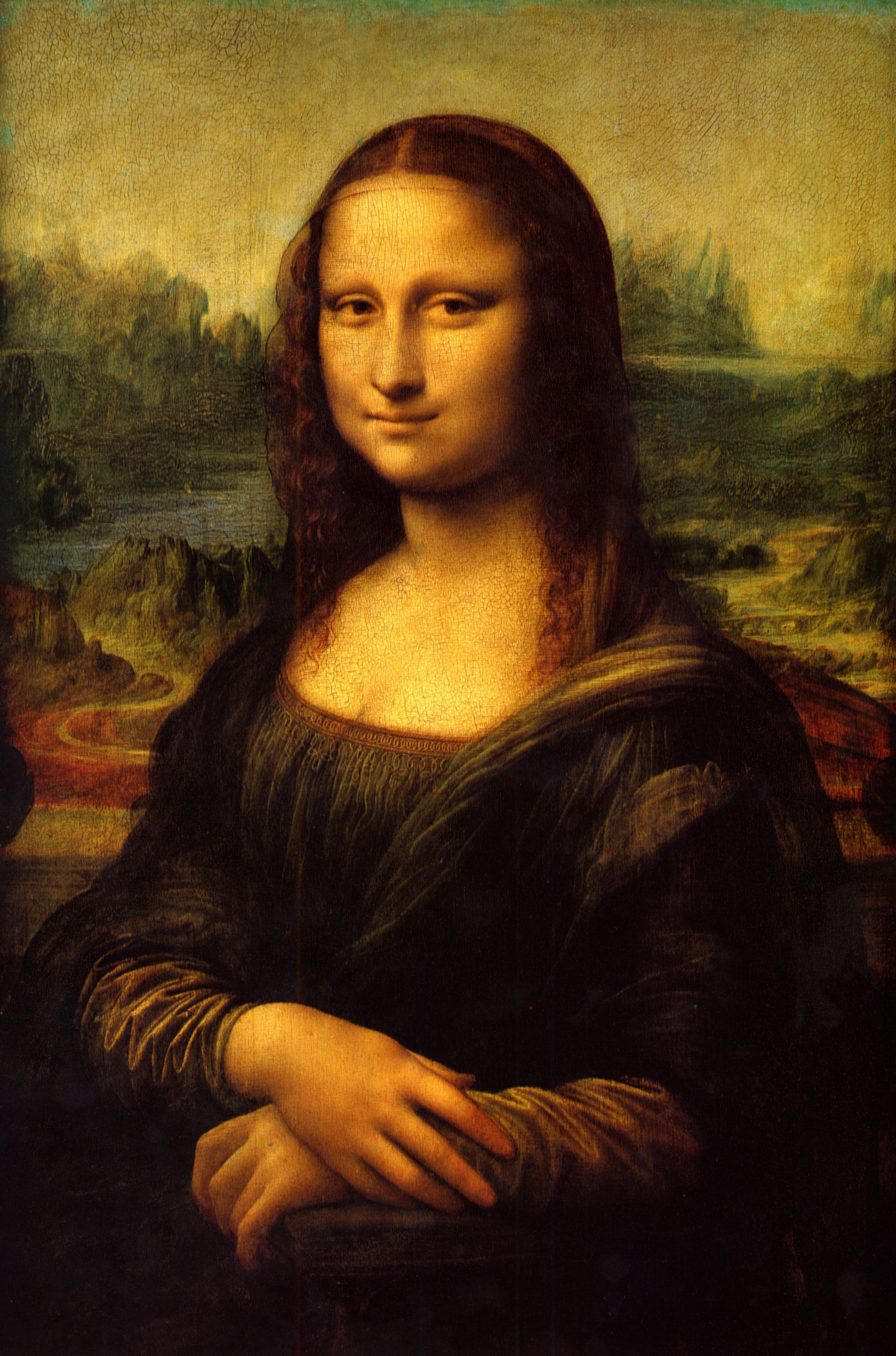
You can survey art students all you wish, but who of them, if any, will produce a work of art on the level of the Mona Lisa?
You can consider this idea that science is the art of prediction with hefty skepticism and try to see what efficacy it has in your life. I see it as a functional way to look at science which can tell you when people are doing science, and when they are not. It can also help you understand the limits of science.
And best of all, it can elevate the wonder about art in our world.
Art is something beyond science. Science can study art. You can probe the Mona Lisa. Consider how it was made. Puzzle out who was portrayed.
But can you really truly explain that painting or any great masterpiece?
I suggest to you that science will never explain art because art is bigger than science, and in fact encapsulates it. Which is an opinion, and a prediction!
So yes, it is science, or as I like to say: meta-science.
Isn't knowledge fun?
My opinions are my own, but you can search on: "science is the art of prediction"
The web makes it easy to look over the history of that phrase. It also lets you look easily at how others talk about what science is.
As for my qualifications for making this post, I need none. It's my blog. But it might be helpful to note I at least have an undergraduate degree in physics, having a B.Sc., which is a Bachelor of Science, from +Vanderbilt University. That means I have a little training in the subject, though the experts in the field tend to have doctorates so I'm not claiming expertise.
Enjoy the search. Find out more about what is predictable in your life, and why.
Science can tell you.
James Harris
Blog ran by me, James Harris. Innovator using meta process analysis. Where ideas rule. Reference site for age of Intelligence.
Translate
Thursday, April 10, 2014
But what is science?
Labels:
commentary,
opinion,
Science
Sunday, April 06, 2014
Article talks price for some of video game success
Given some of the topics on my mind lately I was fascinated by an article from the +The New Yorker with the following provocative title:
THE GUILT OF THE VIDEO-GAME MILLIONAIRES
I've read it and my take on it is that the article has some very articulate developers who describe the kind of issues that you may not usually consider ahead of success--or what most people call success.
And I think it's kind of a weird thing that you can have so much fun doing something that lots of people don't necessarily understand, where it'd be nice to be successful, but then again that success starts wrecking that fun.
My own view is that it's best to worry about success long before you get it, and if you never get it--I'm not successful by world standards--then you're still ok. The preparation doesn't involve what you might think.
Labels:
commentary,
out of the box
Friday, April 04, 2014
Through rain, sleet or snow
Was happy to come across postings recently from the +European Space Agency, ESA about the launch of the Sentinal 1-a satellite, part of the Copernicus Project.
And with worries about the climate often in the news I think it's great that there will finally be satellites that can look through weather--rain, sleet, snow or whatever--to see our planet, with total coverage.
It's the kind of project that deserves a lot of attention and praise. I thank Europeans for taking the lead in this way.
So cool.
And I know about it because of the web as I haven't seen much in the news here in the United States.
Which is so odd. Consider this quote from a Guardian article about it:
Wish the system were in place now. And with certain news dominating news channels here you'd think that our media would have noticed.
Our news media in the United States needs to think beyond just saturation coverage for ratings and also cover the big picture including the systems that can help in the future. Oh well.
But hey, I can bring news too in this modern web age! May those who have been lost be found. And this project will help in the future.
Here's a YouTube video playlist which starts with the cool launch yesterday.
And with worries about the climate often in the news I think it's great that there will finally be satellites that can look through weather--rain, sleet, snow or whatever--to see our planet, with total coverage.
It's the kind of project that deserves a lot of attention and praise. I thank Europeans for taking the lead in this way.
So cool.
And I know about it because of the web as I haven't seen much in the news here in the United States.
Which is so odd. Consider this quote from a Guardian article about it:
...the first satellite of its multibillion-euro Copernicus Earth observation project that will supply valuable images in the event of natural disasters or even a plane crash.
Wish the system were in place now. And with certain news dominating news channels here you'd think that our media would have noticed.
Our news media in the United States needs to think beyond just saturation coverage for ratings and also cover the big picture including the systems that can help in the future. Oh well.
But hey, I can bring news too in this modern web age! May those who have been lost be found. And this project will help in the future.
Here's a YouTube video playlist which starts with the cool launch yesterday.
Labels:
commentary,
Copernicus project,
ESA,
opinion,
Science
Saturday, March 08, 2014
How I picked Vanderbilt
Was looking at my Instagram account which just has a few photos (for now) when I thought about the picture I posted of my certificate from Duke University for going to their program called TIP. And the thing is I was trying to find something to put on Instagram, saw that hanging on the wall and figured it would be a way to preserve it.
And also now I'm seeing how to link to an Instagram photo in my blog so trying something out here. Would be nice if the photo would pull into the blog but I don't know if that can be done so just have the link for now above.
But along with that thought I'd explain why despite having very much enjoyed my times at Duke with TIP, and dreaming for years about going there as a student I didn't even apply later but thankfully at least applied to Vanderbilt University where I got accepted and from which I graduated.
I grew up in the South and did ok I think as a black kid trying to figure out how the world worked and working hard to better my life and get that education thing people were often saying is important. But I was from a lower middle class family and stuck making a lot of decisions myself primarily because my parents were overwhelmed. How were they supposed to know any of this stuff?
It was up to me to figure it out, and with my limited knowledge of things I was often intimidated. And oddly enough, knowing more about Duke University pushed me away from the school as the more I read about them the less confident I was that I would get accepted to that school! And even now since I never applied I don't know.
But I should add that when I was 17 looking at colleges I was lucky enough to have a high enough SAT that a blizzard of schools sent mail to me, including one of the Ivy Leagues and I was just this intimidated teenager saying to myself, no way.
I had no precedent for the experience. And found it hard to see myself as a choice of any of those big names at those important places.
I was just a kid from the rural South trying to figure out how to try and do ok in this life.
And along with the flurry of mail that took a rural Georgia kid by surprise as I tried to manage myself through these decisions completely out of my family's experience there was one from Vanderbilt University.
Thankfully, I had never heard of them. Which is kind of funny as Vanderbilt is one of the best known colleges in the South but I didn't know that at the time.
And oddly enough, as one of those Southern things, I never really thought of Tennessee as the South as I'm from Georgia which I know is the South, but those more Northern states I kind of think of as quasi-South, which I guess is sort of silly.
But somehow the thing that stood out for me was the name. And it's like, I'm wondering to myself, do the Vanderbilts have a school? I had heard of the Vanderbilt family. Turns out of course that the school has received varying attention from the Vanderbilt family, including an important grant from the original famous Cornelius Vanderbilt himself who was often called the Commodore.
And it's like one of those random things as I applied to Vanderbilt University which was the only school I tried.
I don't even remember if Duke sent me anything which may mean I blocked it out.
Thank God I did get accepted by Vanderbilt University and as an adult who has learned a lot more I am so very grateful that my lack of knowledge when a teenager of the best approach to getting into a decent college did not screw up my future.
I was very lucky. And turns out I picked a great school which thankfully did accept me, so it worked out regardless of how.
Ironically I also was recruited after I applied to Vanderbilt by University of Tennessee which felt really good and I do wonder why schools don't recognize that kids from low income families may just not know enough, so it does help to actually be recruited even if you're not a sports person. Why recruit sports folks directly and pay less attention to academic potential? Or do they? And I was just not interesting enough for direct contact for anyone but University of Tennessee?
I think especially for students like myself the personal touch makes a world of difference. Just to know that certain schools wanted me shifted how I looked at myself as before I felt like a reject.
In any event so now I'm a big fan of Tennessee as kind of a second state to my home state of Georgia. Where also I am a big fan of California, so I have 3 main states of which I'm a fan. My Big 3.
And Nashville is a very important city to me, and I find I cheer University of Tennessee as long as they're not playing Vanderbilt, of course.
Interesting how certain choices greatly shape your life and likes.
And also now I'm seeing how to link to an Instagram photo in my blog so trying something out here. Would be nice if the photo would pull into the blog but I don't know if that can be done so just have the link for now above.
But along with that thought I'd explain why despite having very much enjoyed my times at Duke with TIP, and dreaming for years about going there as a student I didn't even apply later but thankfully at least applied to Vanderbilt University where I got accepted and from which I graduated.
I grew up in the South and did ok I think as a black kid trying to figure out how the world worked and working hard to better my life and get that education thing people were often saying is important. But I was from a lower middle class family and stuck making a lot of decisions myself primarily because my parents were overwhelmed. How were they supposed to know any of this stuff?
It was up to me to figure it out, and with my limited knowledge of things I was often intimidated. And oddly enough, knowing more about Duke University pushed me away from the school as the more I read about them the less confident I was that I would get accepted to that school! And even now since I never applied I don't know.
But I should add that when I was 17 looking at colleges I was lucky enough to have a high enough SAT that a blizzard of schools sent mail to me, including one of the Ivy Leagues and I was just this intimidated teenager saying to myself, no way.
I had no precedent for the experience. And found it hard to see myself as a choice of any of those big names at those important places.
I was just a kid from the rural South trying to figure out how to try and do ok in this life.
And along with the flurry of mail that took a rural Georgia kid by surprise as I tried to manage myself through these decisions completely out of my family's experience there was one from Vanderbilt University.
Thankfully, I had never heard of them. Which is kind of funny as Vanderbilt is one of the best known colleges in the South but I didn't know that at the time.
And oddly enough, as one of those Southern things, I never really thought of Tennessee as the South as I'm from Georgia which I know is the South, but those more Northern states I kind of think of as quasi-South, which I guess is sort of silly.
But somehow the thing that stood out for me was the name. And it's like, I'm wondering to myself, do the Vanderbilts have a school? I had heard of the Vanderbilt family. Turns out of course that the school has received varying attention from the Vanderbilt family, including an important grant from the original famous Cornelius Vanderbilt himself who was often called the Commodore.
And it's like one of those random things as I applied to Vanderbilt University which was the only school I tried.
I don't even remember if Duke sent me anything which may mean I blocked it out.
Thank God I did get accepted by Vanderbilt University and as an adult who has learned a lot more I am so very grateful that my lack of knowledge when a teenager of the best approach to getting into a decent college did not screw up my future.
I was very lucky. And turns out I picked a great school which thankfully did accept me, so it worked out regardless of how.
Ironically I also was recruited after I applied to Vanderbilt by University of Tennessee which felt really good and I do wonder why schools don't recognize that kids from low income families may just not know enough, so it does help to actually be recruited even if you're not a sports person. Why recruit sports folks directly and pay less attention to academic potential? Or do they? And I was just not interesting enough for direct contact for anyone but University of Tennessee?
I think especially for students like myself the personal touch makes a world of difference. Just to know that certain schools wanted me shifted how I looked at myself as before I felt like a reject.
In any event so now I'm a big fan of Tennessee as kind of a second state to my home state of Georgia. Where also I am a big fan of California, so I have 3 main states of which I'm a fan. My Big 3.
And Nashville is a very important city to me, and I find I cheer University of Tennessee as long as they're not playing Vanderbilt, of course.
Interesting how certain choices greatly shape your life and likes.
Labels:
behind the scenes
Wednesday, March 05, 2014
Why money no longer rules
When I grew up here in the United States in a region commonly called the South, it was a world where money ruled. What we saw on television was decided by wealthy people for the most part, which was also true of what was in the newspapers. Movies were dominated by the wealthy who could fund making them which is still true today I should add. And, also like many think it still is today, for politicians to gain power they needed vast amounts of money to buy advertising on, yup, television.
Money ruled because lots of money was usually necessary to get your ideas out there.
Today the web has completely eradicated that reason.
Now it's actually the opposite. People with lots of money can go down in utter flames, especially in politics, listening to advisers who convince them that all they need is to spend enough money on consultants and political ads, when that is not the case.
Entire governments can fall when wealthy rulers, even with billions at their disposal, and the power structures of state, lose anyway simply because people can talk about their corruption, and decide as a nation to make a change to pursue better.
Whether they get better or not is, of course, a different matter, but now it's not like before when the conversation could be drowned out by people with lots of money.
The difference in our day is that I can talk to a world, on a blog, without spending any money at all! And write up a post while drinking my morning cup of coffee because I thought of it a few minutes ago, just a bit after breakfast.
I really enjoy a cup of coffee in the morning.
But words can topple nations. Thoughts and ideas shared with others can unite in a common vision to at least try to have a better world.
Can we at least agree to try to have a better world?
And petty tyrants can tremble in their gaudy palaces. Can worry as they eat off their gilded plates. And sweat while they pretend that their money is all that matters in a world where the writer can take you apart by just believing enough in humanity to share.
The web now rules.
Soon that lesson will be the great one learned as it shakes this world, changes the future direction of humanity, and I think leads to a better reality for us all.
Ok, now back to my coffee.
Oh yeah, so how long does it take me from start to finish? Kind of in a rush this morning so about 15 minutes. After I do a rough draft which I may post, I'll keep coming back to edit. Generally I'm done editing in two days.
Why put up rough drafts then versus waiting till I've finished primary editing?
Because it helps me edit to have a rough draft up, as it puts the pressure of knowing that what I have up there is already being read by some in several countries where it's usually half a dozen.
And I like that pressure. Besides, even my rough drafts I confidently believe, are usually good enough.
Now I'm back in the early afternoon after lunch, and I'm in edit mode, where I check through what I wrote before and decided to continue down the path I started this morning of, for once, talking about how I tend to do posts.
First I do a read through of what was written earlier checking for obvious mistakes of any kind, and then I do another read through for how the writing flows. I will also be thinking to myself, does it make sense? What am I really trying to say here? Who do I think the audience is?
I make changes as I edit, and then repost with the changes at various points depending on my mood. Sometimes it's just kind of like an itch to just get it out there. And having finished this post below (I think) I'm doing more re-reads. I think I'm on read 4, and probably will read at least 8 times all the way through before I'm done. Along with that will be other mini-reads through sections of the post where it's not worth it to try and estimate a count. Writing about the process is interesting to me as well, so I'll be finding that fascinating in my own read throughs.
Reading through again should be fun, or I will probably decide the writing missed the target. The thing is I enjoy both the writing, the reading and the editing, as all are needed. And without that pleasure in the activity, what would be the point of doing it?
Which raises the question: how effective do I think my own writing is?
My answer is that it fulfills my needs and sense of purpose in the ideal. We actually DO have a wonderful situation in our modern times where anyone can get out here on the web and SAY something that can potentially be read all over the world.
And that's just makes for so much giddy fun.
For me writing is so much of the point. If it does help the conversation that is great as well and I write on topics I think should help--not harm. But how does anyone really know how much good they do?
I think the best thing with what we can now is to try.
And now I have more reading and editing to do with this post. But I have a feeling it is otherwise done.
James Harris
Money ruled because lots of money was usually necessary to get your ideas out there.
Today the web has completely eradicated that reason.
Now it's actually the opposite. People with lots of money can go down in utter flames, especially in politics, listening to advisers who convince them that all they need is to spend enough money on consultants and political ads, when that is not the case.
Entire governments can fall when wealthy rulers, even with billions at their disposal, and the power structures of state, lose anyway simply because people can talk about their corruption, and decide as a nation to make a change to pursue better.
Whether they get better or not is, of course, a different matter, but now it's not like before when the conversation could be drowned out by people with lots of money.
The difference in our day is that I can talk to a world, on a blog, without spending any money at all! And write up a post while drinking my morning cup of coffee because I thought of it a few minutes ago, just a bit after breakfast.
I really enjoy a cup of coffee in the morning.
But words can topple nations. Thoughts and ideas shared with others can unite in a common vision to at least try to have a better world.
Can we at least agree to try to have a better world?
And petty tyrants can tremble in their gaudy palaces. Can worry as they eat off their gilded plates. And sweat while they pretend that their money is all that matters in a world where the writer can take you apart by just believing enough in humanity to share.
The web now rules.
Soon that lesson will be the great one learned as it shakes this world, changes the future direction of humanity, and I think leads to a better reality for us all.
Ok, now back to my coffee.
Oh yeah, so how long does it take me from start to finish? Kind of in a rush this morning so about 15 minutes. After I do a rough draft which I may post, I'll keep coming back to edit. Generally I'm done editing in two days.
Why put up rough drafts then versus waiting till I've finished primary editing?
Because it helps me edit to have a rough draft up, as it puts the pressure of knowing that what I have up there is already being read by some in several countries where it's usually half a dozen.
And I like that pressure. Besides, even my rough drafts I confidently believe, are usually good enough.
Now I'm back in the early afternoon after lunch, and I'm in edit mode, where I check through what I wrote before and decided to continue down the path I started this morning of, for once, talking about how I tend to do posts.
First I do a read through of what was written earlier checking for obvious mistakes of any kind, and then I do another read through for how the writing flows. I will also be thinking to myself, does it make sense? What am I really trying to say here? Who do I think the audience is?
I make changes as I edit, and then repost with the changes at various points depending on my mood. Sometimes it's just kind of like an itch to just get it out there. And having finished this post below (I think) I'm doing more re-reads. I think I'm on read 4, and probably will read at least 8 times all the way through before I'm done. Along with that will be other mini-reads through sections of the post where it's not worth it to try and estimate a count. Writing about the process is interesting to me as well, so I'll be finding that fascinating in my own read throughs.
Reading through again should be fun, or I will probably decide the writing missed the target. The thing is I enjoy both the writing, the reading and the editing, as all are needed. And without that pleasure in the activity, what would be the point of doing it?
Which raises the question: how effective do I think my own writing is?
My answer is that it fulfills my needs and sense of purpose in the ideal. We actually DO have a wonderful situation in our modern times where anyone can get out here on the web and SAY something that can potentially be read all over the world.
And that's just makes for so much giddy fun.
For me writing is so much of the point. If it does help the conversation that is great as well and I write on topics I think should help--not harm. But how does anyone really know how much good they do?
I think the best thing with what we can now is to try.
And now I have more reading and editing to do with this post. But I have a feeling it is otherwise done.
James Harris
Labels:
commentary,
out of the box
Subscribe to:
Posts (Atom)